8174 Old Highway 12, Walla Walla, WA 99362


Can Your Vehicle Pull That Trailer? A Simple Way to Check
One of the best questions we hear on the lot is this: can my truck pull the trailer I want? Here is how to know in three clear steps.
Step 1: Know Your Trailer Type
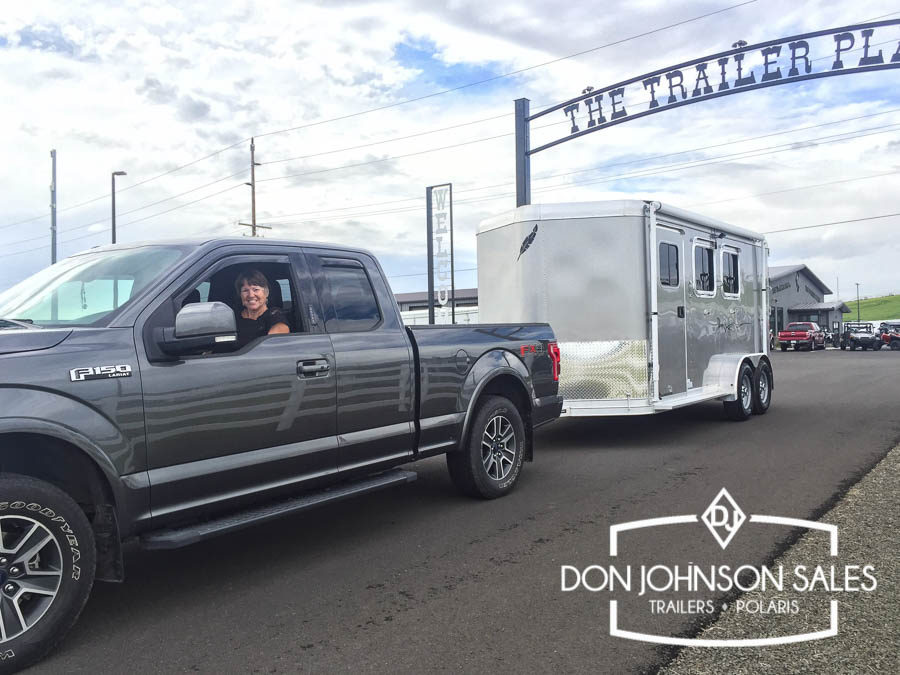
Bumper pull connects to a ball on a receiver hitch mounted behind your vehicle. Its tongue weight, the force pressing down on the hitch, runs about 10 to 15 percent of the loaded trailer weight.
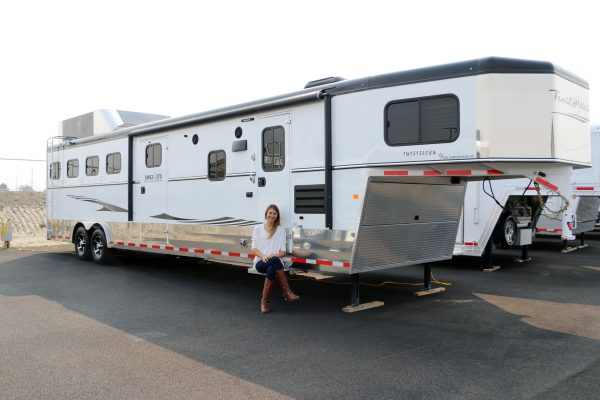
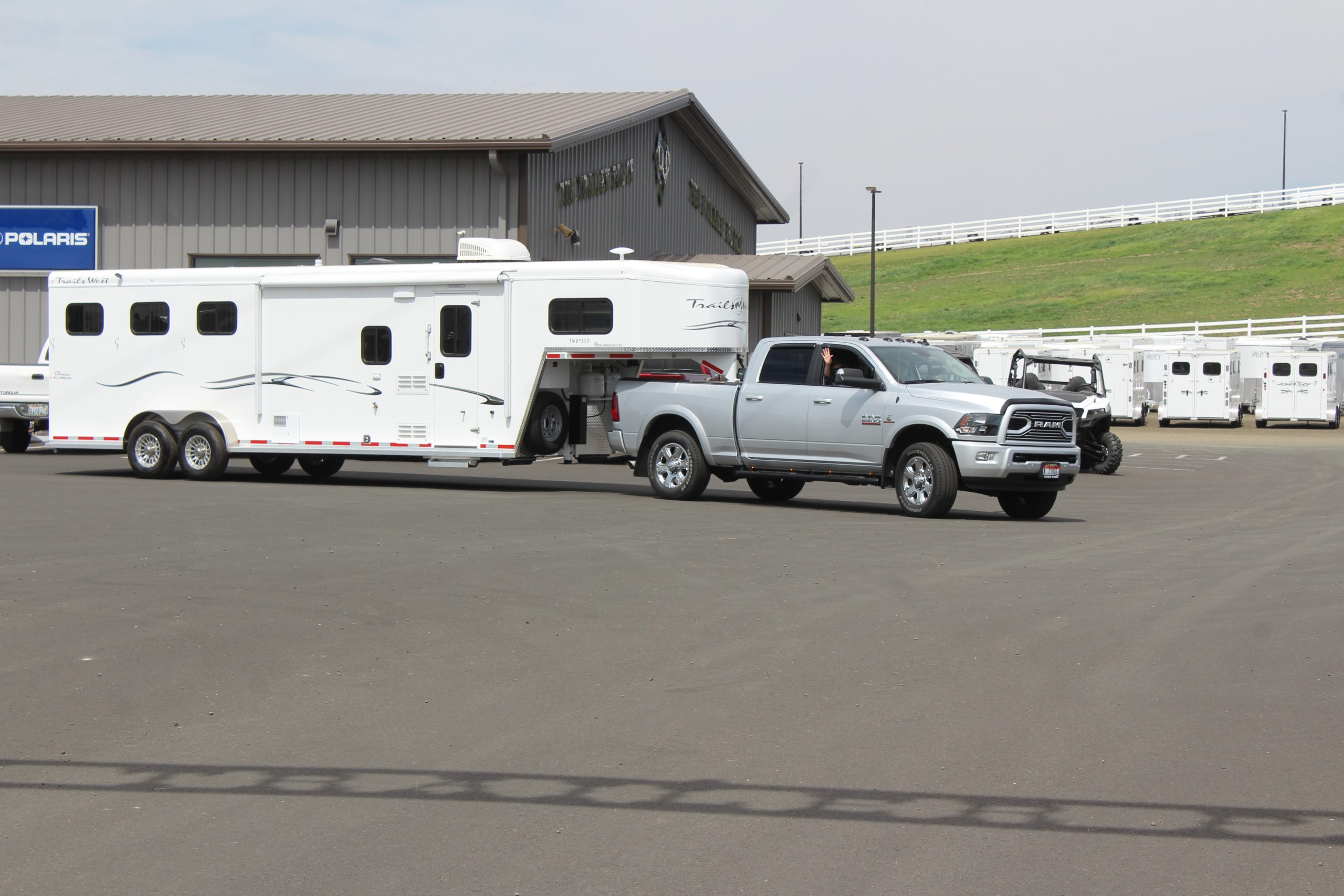
Gooseneck connects to a ball mounted in the bed of a pickup, over the rear axle. Its pin weight, the force pressing down on the hitch, runs about 20 to 25 percent of the loaded trailer weight.
Step 2: Add Up What You Are Pulling
Build your loaded trailer weight from three pieces:
- Empty trailer weight: Find the dry weight on the trailer’s sticker or spec sheet.
- Livestock: Multiply your head count by the average weight per animal. Horses run roughly 1,000 lbs for a light riding horse, around 1,300 lbs for a larger warmblood. A working average of 1,100 lbs per horse plans well, and you can confirm with actual weights when you have them.
- Gear: Add tack, feed, water, and hay, usually around 200 to 400 lbs.
Add those together for your loaded trailer weight. For a quick, conservative figure, you can also use the trailer’s GVWR, its maximum loaded weight printed on the sticker.
Then grab two numbers from your vehicle from the owner’s manual, the driver’s door jamb sticker, or a VIN lookup:
- Maximum tow rating: the heaviest trailer your vehicle is built to pull.
- Payload capacity: how much weight you can add to the vehicle itself, covering passengers, cargo, and the weight the trailer transfers to the hitch.
Step 3: Run the Numbers, Including Weight Transfer
Two checks confirm a safe match:
- Weight check: Keep your loaded trailer weight at or below your vehicle’s maximum tow rating.
- Weight transfer check: The tongue or pin weight transfers onto your vehicle and counts toward payload. Estimate it, then confirm it fits within your payload after passengers and gear.
- Bumper pull: loaded trailer weight times 12 percent gives a solid estimate.
- Gooseneck: loaded trailer weight times 22 percent gives a solid estimate.
When both checks land in range, you have a safe, confident match.
Example: Hauling Three Horses
Say you are pulling a three-horse gooseneck with a one-ton pickup rated for 16,000 lbs of towing and 3,400 lbs of payload.
Build the loaded trailer weight:
- Empty trailer weight: 7,200 lbs
- 3 horses at 1,100 lbs each: 3,300 lbs
- Tack, feed, and water: 400 lbs
- Loaded trailer weight: 10,900 lbs
Now run the checks:
- Weight check: 10,900 lbs sits within the 16,000 lb tow rating.
- Weight transfer check: 10,900 times 22 percent is about 2,400 lbs of pin weight. Add a driver, a passenger, and cab gear around 500 lbs, and your used payload reaches 2,900 lbs, comfortably inside the 3,400 lb payload.
Both checks pass, so this rig is a great fit for the drive.
Options When a Trailer Sits Near or Above Your Range
Sometimes the trailer you love comes in heavier than your current setup handles comfortably. Several proven upgrades help you tow with more confidence, and each one plays a specific role.
- Rebalance the load: Shifting cargo forward of or over the axle fine-tunes tongue or pin weight into the sweet spot. This step is free and often does the trick.
- Weight-distribution hitch (bumper pull): This hitch spreads the tongue weight across your front and rear axles and the trailer axles. The result is a level ride, straighter tracking, and easier steering, which helps many trucks and SUVs reach their full rated tow capacity.
- Airbags on the Truck: Airbags keep the rear of your truck level and steady under load, smoothing the ride and sharpening control. Your vehicle’s tow rating and payload stay the guide for total weight, and airbags help you carry that weight evenly and comfortably.
- Brake controller: An integrated brake controller (if vehicle is not equipped) gives you smooth, confident stops with heavier trailers.
- Step up to a more capable vehicle: When a trailer’s loaded weight runs above your tow rating or payload, a truck with higher ratings opens the door to the load you want. Moving from a half-ton to a three-quarter-ton or one-ton pickup adds substantial towing and payload room, and a gooseneck setup carries pin weight right over the rear axle for the heaviest hauls.
Getting the hardware right makes all the difference, and our service shop handles it right here. We install gooseneck hitches, stock bumper pull stingers, and carry adjustable balls to match your trailer’s coupler size and height for a level, balanced tow.
The Bottom Line
Match the trailer style to your vehicle, add up your loaded trailer weight, then run the two checks. When your loaded weight fits your tow rating and the weight transfer fits your payload, you are ready to load up and roll. When a trailer sits near the edge, the right hitch, airbags, or a more capable truck brings it into range, and our service shop can install and dial in your setup.
We are happy to assist you in the calculations as well, feel free to call, text or best yet – come see us at The Trailer Place, and let’s find the rig that fits.